What Candles Are Non-Toxic? Safe Picks for Your Home
There’s something so nice about lighting a scented candle at the end of the day. I know for me personally, it just kind of shifts things. The kitchen’s finally clean, the kids are asleep (or at least contained), and for a minute, the house feels calm again. It’s one of those small rituals that feels like self-care without really trying.
But lately, there’s been this conversation that keeps coming up. In group chats, on podcasts, during those late-night Google spirals… about candles and indoor air quality. And if you’ve ever gone down that path, you’ll know that once you learn something, you can’t unlearn it.
A lot of conventional candles, especially those that smell amazing, can release trace amounts of harmful chemicals into the air as they burn. Not enough to cause immediate panic, but enough to make you pause… especially when you’re thinking about your kids, your pets, and the air you’re breathing every single day.
So naturally, more of us are asking better questions. What’s actually in the candles we’re lighting? Are there safer options? And what does “non-toxic” even mean in this space? That’s exactly what we’re getting into today. This is your grounded, totally real-life guide to non-toxic candles. By the end, you'll know what to look for, what to avoid, and the ones I genuinely think you’ll love having in your home.
What Candles Are Non-Toxic? Safe Picks for Your Home
While most candles these days might smell good, they’re not good for you. They’re most often made with paraffin wax, which is a by-product of petroleum. When it burns, it can let off chemicals like benzene and toluene.
Now, before you worry: Yes, the amounts are usually considered “safe.” However, if you’re lighting candles every day, in the same room around kids or pets, it’s worth reconsidering. You don’t have to stop burning candles entirely, though. That’s where non-toxic candles come in.
Look for ones made from soy, beeswax, or even coconut blends. Cotton wicks are better, too. And please make sure you check the ingredients. Simple is always best; stick with clear fragrance information you can understand. Small swaps like this make the air in your home feel lighter, and honestly, your body will notice.
It’s not about giving up candles. It’s about choosing ones that feel good, smell good, and actually fit your home. And if you’re already making swaps in other areas, like switching to a non-toxic shampoo or learning about toxic ingredients to avoid in skincare products, this is just a natural next step for a clean home.
Do Candles Emit Toxins?
Short answer: Yes, but it depends.
Burning anything (wood, wax, food) produces heat, soot, and particulate matter. So technically, all candles emit something when lit. The concern comes with paraffin wax candles, which can release trace amounts of Volatile Organic Compounds (VOCs) as they burn. Some studies suggest these emissions are within acceptable safety limits during typical use.
But here’s the nuance. Those studies often don’t account for:
Small, enclosed rooms
Frequent use
Sensitive individuals (like kids or pets)
Long-term exposure over years
So while lighting a candle occasionally isn’t something to panic over, using lower-quality candles daily in a closed space… that’s where it becomes more of a gray area. And if you’re already leaning into non-toxic living, it’s important to choose options that reduce exposure when possible.
Here are common chemicals and toxins found in ingredients to be mindful of:
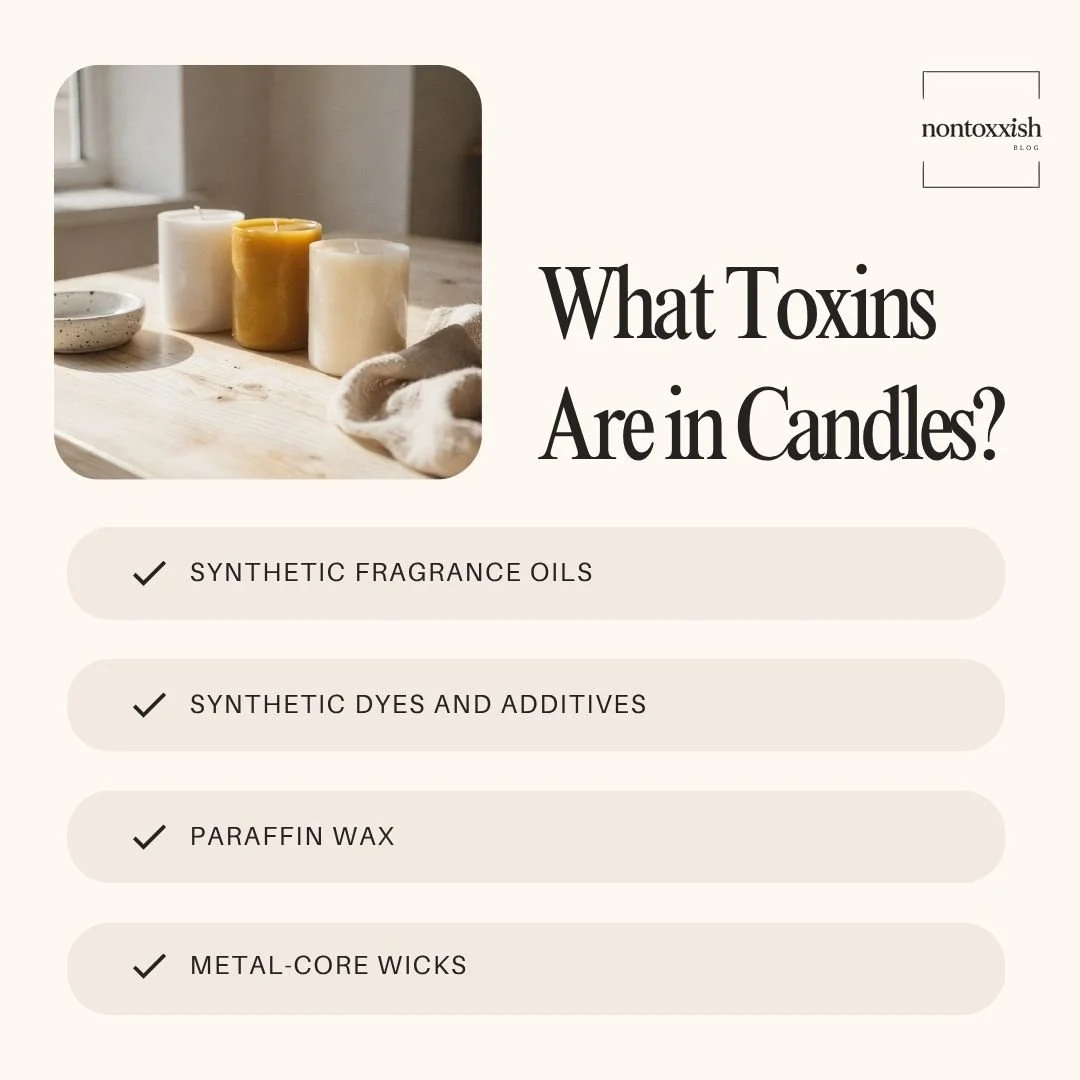
What Toxins Are in Candles?
Synthetic Fragrance Oils
This is the one that surprises most people. That “clean linen” or “vanilla sugar” scent? It’s often made with synthetic fragrances, which may contain phthalates, parabens, and undisclosed chemical blends. Because fragrance formulas are considered proprietary, companies don’t have to list every ingredient. And what does this mean for us? That we don’t always know what we’re breathing in.
Synthetic Dyes and Additives
Those beautifully colored candles? They often contain synthetic dyes and additives that can contribute to soot and additional VOCs when heated. This isn’t the worst part of candles, but it’s definitely not aligned with the non-toxic approach we’re searching for.
Paraffin Wax
Paraffin wax is one of the biggest culprits in traditional candles. When burned, it can release carcinogens like benzene, toluene, formaldehyde, and acetone. It’s no secret that these aren’t things we want ourselves (or our loved ones!) breathing in. However, research has found a link between these compounds and both respiratory irritation and indoor air pollution.
Metal-Core Wicks
While banned in many countries, some lower-quality or imported candles may still use metal-core wicks. When burned, these can release trace heavy metals into the air. It’s less common now, but still something to be aware of.
Are All Candles Toxic?
No, not all candles are toxic.
But many conventional ones do release small amounts of chemicals when burned. Though, the level and type of emissions really depend on what the candle is actually made from. Think of it like food.
Not all packaged foods are “bad,” but once you start reading labels, you naturally gravitate toward cleaner, simpler options. The same process applies here. There are plenty of paraffin-free candles made with safe materials and designed to burn cleaner. It’s just about knowing what to look for.
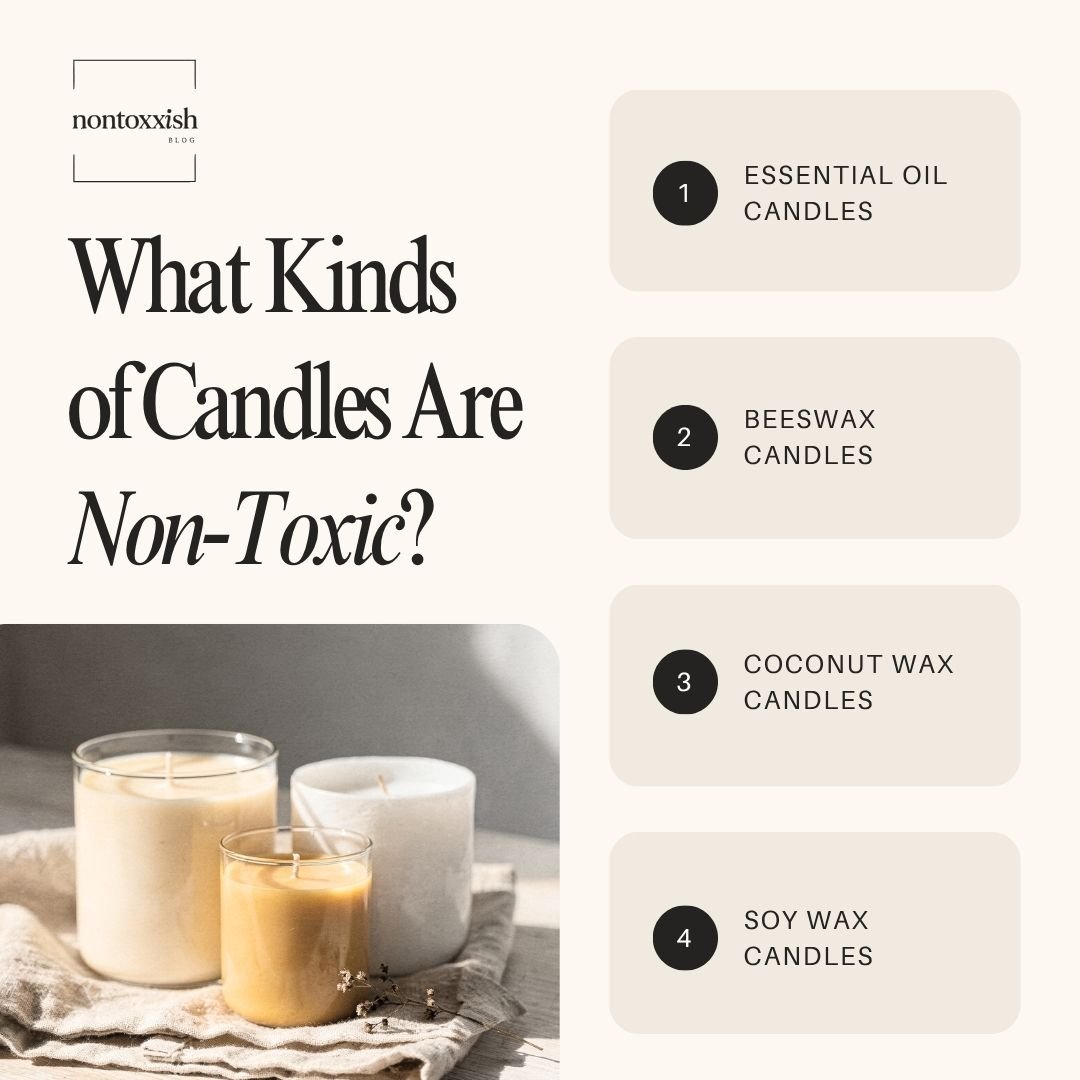
What Kinds of Candles Are Non-Toxic?
Essential Oil Candles
Essential oil candles use pure essential oils instead of synthetic fragrance. The scent tends to be more subtle, and honestly, a little less “perfect", but that’s kind of the point. It’s real, not manufactured. In addition to a cleaner scent, these candles often offer genuine aromatherapy benefits, like relaxation or energy!
Beeswax Candles
Pure beeswax candles are among the cleanest-burning options on the market. They’re naturally fragrance-free (with a subtle honey scent), produce minimal soot, and are often considered the gold standard for indoor air quality. I know what you may be thinking… “Why would I buy a candle with such a subtle scent?” Think of it as both a cleaner alternative and an aesthetic upgrade. Beeswax candles last 50-60% longer than paraffin, and produce a warm, relaxing glow.
Coconut Wax Candles
Candles made with coconut oil or coconut wax blends are another great option. They burn evenly, hold scent well, and many brands combine them with soy for a smooth, clean burn. While they may have a softer, gentler scent, they evenly disperse throughout the room for a more balanced fragrance experience.
Soy Wax Candles
Made from soybean oil, these are one of the most common alternatives to paraffin. Look for 100% soy wax (not blends) to make sure you’re getting the cleanest option. The best part? Soy wax candles burn more slowly, produce less soot, and are environmentally friendly. You can even find them in floral, citrus, woody, sweet, and fresh scents, offering a cleaner, more versatile option.
Which Candles Are Non-Toxic?
Here are a few non-toxic candles I genuinely love and recommend. These are the ones I’d feel good lighting around my family:
Primally Pure
As one of the most well-regarded brands for non-toxic candles, Primally Pure consistently stands out for those wanting more intentional swaps. Each candle is made with a blend of beeswax and coconut wax to infuse your space with negative ions and non-toxic aromas.
If you haven’t had a candle that produces negative ions, this is your sign to get one. This additive neutralizes pollutants in the air, essentially serving as a natural purifier. And with scents like Sweet Floral Sage, Cool Citrus Breeze, and Bergamot + Eucalyptus, you can feel good about your house smelling good.
100% Pure Beeswax Candles (Various Small Brands)
This is more of a category than one specific brand, but really, some of the best options come from smaller makers. You’ll usually find simple glass jars, pure beeswax, and not much else. No added fragrance, minimal soot, and they tend to burn for ages.
Pure beeswax candles are also a really good option if you’re sensitive to smells or just want something more subtle. They don’t have that strong scent throw most people are used to… but ultimately, that’s the point! The atmosphere feels softer. Calmer. Less “in your face.” That’s the benefit of non-toxic and clean-burning alternatives.
Natural Sloth
This one feels a bit more niche, but it’s definitely growing! Natural Sloth focuses on keeping ingredients really minimal and transparent, leaning into the eco-conscious aspect of the business.
And with scents like lavender lemonade and herb garden, you don’t have to give up those good-feeling, good-smelling aromas. It’s one of those brands that feels aligned with a slower, more intentional home setup.
Summer Solace Tallow
This one feels a bit different to your typical clean candle. It leans more toward a traditional approach, using tallow (animal fat) blended with beeswax rather than the usual plant waxes. Everything is small-batch and pretty minimal ingredient-wise, so you don’t have to overthink what you burn throughout your home. The scent is also softer, more relaxing, and less of that strong “throw” you get from conventional candles.
It’s definitely more niche, and not everyone will love the idea of tallow. But if you’re into simple, traditional ingredients and a new way of doing things, it’s an interesting option to look into. The Vanilla Nectar and Peru Balsam Tallow and Beeswax Candle is my absolute favorite!
Terralite
Terralite is one that kept coming up when I started looking into cleaner candles. And the more I looked into it, the more it made sense. They use coconut and plant-based wax blends, and they’ve got a refill system, which I LOVE from a waste perspective.
It just feels a bit more considerate. If you still want a candle that actually smells like something (but without going full synthetic), this is a good middle ground.
Fontana Candle Co.
If you’ve spent any time looking into non-toxic candles, you’ve probably come across Fontana Candle Co. They seem to pop up everywhere, and for good reason. They use a beeswax and coconut oil blend, cotton wicks, and they’re pretty open about what goes into their candles, which I always appreciate.
Everything is hand-poured, and their whole focus is keeping things as clean as possible. They also do options with essential oils instead of synthetic fragrance, which is a big plus if you’re trying to avoid that stronger, artificial scent.
Choosing non-toxic items for your home is about feeling confident in the little choices we make every day.
Lighting a candle should feel like comfort, not a question mark. And the good news is, you don’t have to give it up! You just get to do it better. Choosing clean burning candles, paying attention to fragrance oils, opting for paraffin-free waxes, and sticking with cotton wicks. These are small changes that make a real difference in your home’s air quality.
And that’s really what this whole journey is about… Learning, adjusting, and creating a space that feels safe, healthy, and aligned with the life you’re building. If you want more guides like this, you can always explore more on the Nontoxxish blog. And, of course, don’t forget to visit the Nontoxxish shop to view all of my favorite, non-toxic products.
However you got here, I’m really glad you did. ♡