How to Clear Mental Fog Postpartum Naturally

There’s a kind of tiredness as a mom that isn’t just about sleep. It’s that feeling where you walk into a room and forget why… or read the same message a few times, and it still doesn’t land. If you’re in the postpartum stage, you’ve probably felt it.
It’s that hazy, slightly out-of-it feeling, when simple things take way more effort than they should. People call it mom brain or baby brain. It’s really common, but it just doesn’t get talked about properly. It can mess with your focus, your memory, and even how clearly you think day to day. Honestly, it kind of feels like your brain is just a step behind.
And when everything else already feels new, chaotic, and a little overwhelming during postpartum, mental fog can make everyday things feel heavier than they should. So this is just a simple guide on how to clear some of that fog… and start feeling a bit more like yourself again.

How to Clear Mental Fog Postpartum Naturally
A lot of new moms feel caught off guard by the cognitive changes that happen after childbirth. You expect the physical recovery, maybe even the emotional waves, but the mental fog can feel unexpected. Understanding that postpartum period brain fog is real (and temporary) is such an important first step. Your brain isn’t “broken.” It’s adapting.
In this guide, you’ll learn simple, science-backed ways to support your brain function, improve clarity, and feel more attentive in your day-to-day life.
What Is Mental Fog in Postpartum?
Postpartum mental fog, often called mom brain, is a common experience where your thinking feels slower, less clear, and more effortful than usual. After that, it’s more about how it shows up day to day. You might notice you’re forgetting things more easily, losing your train of thought, or needing a bit more time to focus. Even simple decisions can feel harder than they should.
And it’s not quite the same as just being tired; it’s more like a mental blur. Things don’t feel as sharp or automatic as they once did. And, naturally, it shows up a lot in early motherhood. Your attention is split, your routine is different, and there’s just more going on mentally than before. It can feel frustrating at times… but it’s also really normal.
Is Postpartum Brain Fog a Thing?
Yes, postpartum brain fog is very real. And a lot of women go through it.
After birth, your body is shifting quite a bit hormonally. Estrogen and progesterone, which are essential for cognitive functioning, quickly plummet. After that drop, things like focus and memory can feel a bit “off.” Then there’s the sleep… or rather the lack of it. Things like broken sleep, early wake-ups, and waking throughout the night can make your thinking feel slower and less clear.
You also have to consider nutrient deficiencies! Pregnancy and breastfeeding can quickly deplete nutrients like iron, B vitamins, and omega-3 fatty acids. And, of course, these are all essential for supporting brain health. When those are low, you notice it. Add on looking after a newborn, thinking about everything, adjusting to a completely new routine, and you have the recipe for brain fog. It’s a constant kind of demand in the background.
When you put all of that together, it makes sense that your brain might feel a bit slower than usual. You’re not broken, you’re just adjusting in real time.
What Causes Brain Fog in Postpartum?
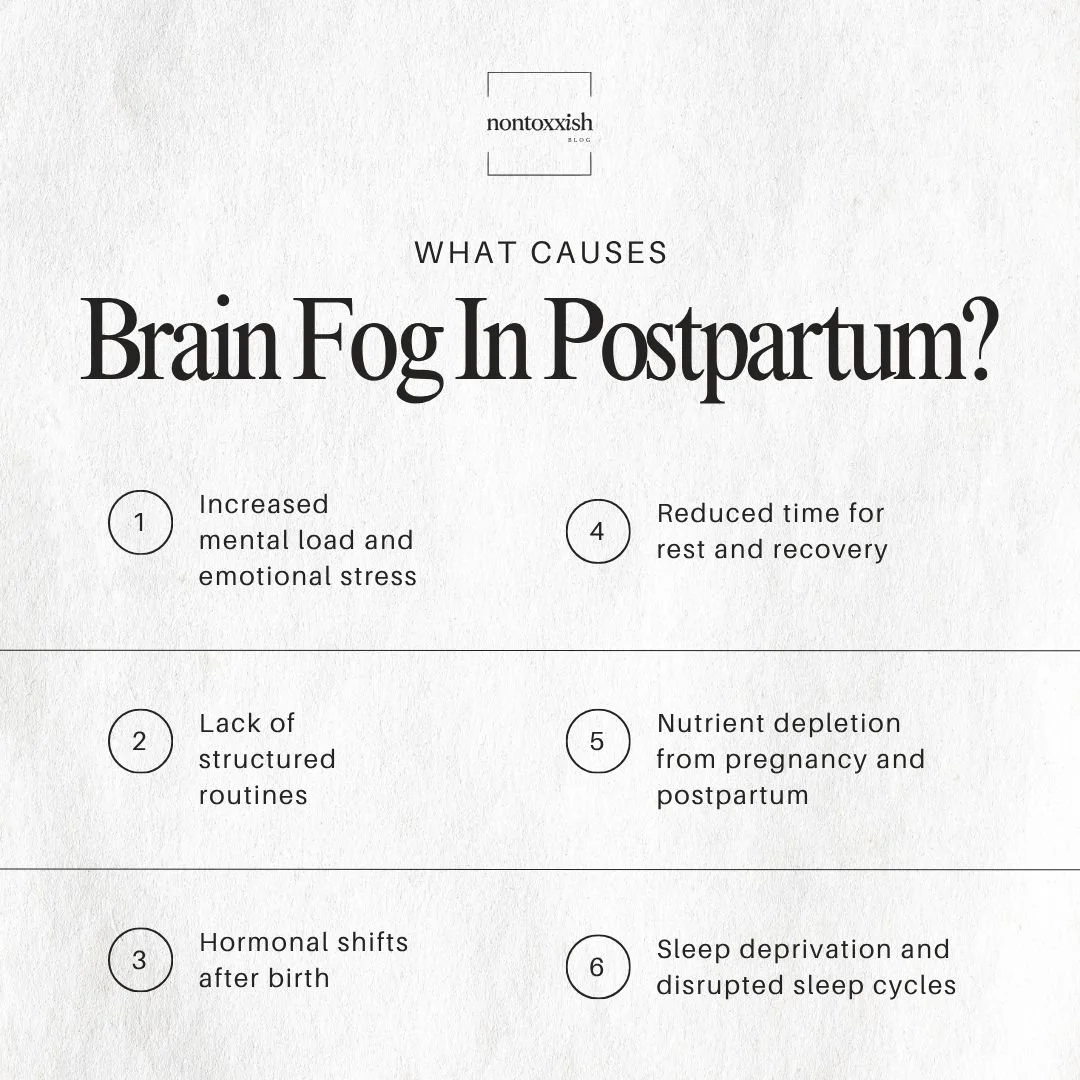
Okay, so what exactly causes brain fog in postpartum? It can be a result of so many factors, including:
Increased mental load and emotional stress
Lack of structured routines
Hormonal shifts after birth
Reduced time for rest and recovery
Nutrient depletion from pregnancy and postpartum
Sleep deprivation and disrupted sleep cycles
Reduction in gray matter volume
While one mom may struggle with a lack of routine, another may struggle with reduced recovery time. Everyone is different, and brain fog can look different from mom to mom. What’s most important is knowing how long it lasts and having a plan in place to feel like you again.
How Long Does Postpartum Brain Fog Last?
This is one of those questions where the answer isn’t super clear. Ultimately, how long brain fog lasts just depends.
For some women, it starts to lift after a couple of months, especially when sleep begins to improve. For others, it can stick around longer, sometimes six months or more. Especially if sleep is still all over the place or you’re breastfeeding.
There isn’t really a set timeline. It changes from person to person, and things like recovery, support, food, and stress all play a role. But it does get better. Not in a big, obvious way all at once… more gradually. You just start to feel a bit clearer again over time.
When Does Postpartum Brain Fog Go Away?
For a lot of moms, things start to feel a bit clearer around 8 to 12 weeks postpartum. That’s usually when routines settle a little, and the first intense stretch starts to ease. However, as I mentioned earlier, you won’t feel that shift all at once. Improvement happens gradually, with a few clearer moments here and there. Over time, those moments begin to happen more and more.
If sleep is still really broken, or your body’s a bit depleted, it can stick around longer. That doesn’t mean anything is wrong… it just means you might need a bit more postpartum support. And if it ever feels like too much, or it’s not improving in a way that feels okay, it’s worth talking to someone about it. Support matters. You don’t have to just push through it.
How to Help Postpartum Brain Fog
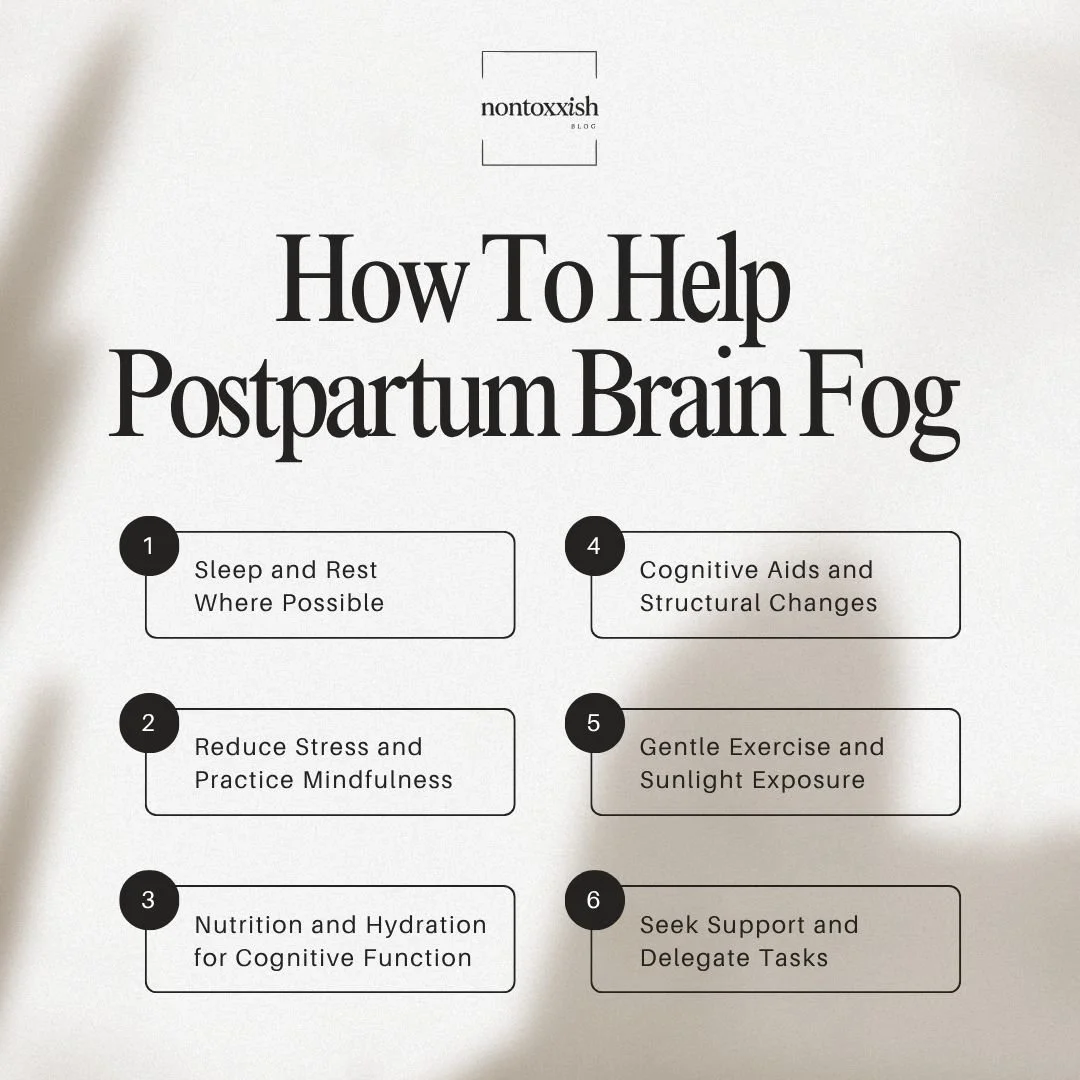
Sleep and Rest Where Possible
Sleep is one of the biggest factors affecting brain function. And, of course, it’s also one of the hardest things to navigate in early motherhood. Even so, small moments of rest can help more than you'd think. Short naps when the baby sleeps, even for 20 minutes, can make a difference. And if nobody’s told you: rest can be more valuable than just “trying to push through.”
If there’s any way to share the load at night, or accept help from a partner or someone else, those little pockets of extra rest really do add up. It won’t be perfect, but it will help your brain fog.
Reduce Stress and Practice Mindfulness
The invisible load of motherhood is a lot… even when everything looks fine on the outside. Small moments to yourself can really help. A few deep breaths, sitting for a minute without doing anything, and even just pausing during the day when you can, will help you regulate.
You don’t need a full routine or anything complicated. In fact, trying to force a routine in moments like these can feel even more overwhelming. Instead, just focus on small resets here and there to take the edge off and feel like you again. Give yourself time to use your skincare staples at nighttime. Prioritize self-care baths with serotonin soaks and gentle music. Do what you can to make things feel calming, relaxing, and more structured. Feeling physically comfortable during recovery matters too, which is why choosing what to wear postpartum can also make a big difference.
Nutrition and Hydration for Cognitive Function
Your brain needs fuel, even more so after pregnancy and birth. Things like omega-3s, choline, B vitamins, iron, and vitamin D, especially if you’re breastfeeding, all play a role in how clear you feel mentally.
Hydration is an essential factor during this process, too. Even being a little dehydrated can make you feel more foggy or tired than you realize. It’s incredibly important to give your body what it needs to recover well.
Cognitive Aids and Structural Changes
When your brain feels foggy, external support actually helps more than trying to “push through.” Take advantage of things like lists, reminders, calendars, and anything that takes pressure off remembering everything.
Even small things like planning meals or laying clothes out the night before can reduce that constant decision fatigue. And here’s the thing: the more you do it, the less it feels like a chore. Instead, it becomes an intentional, mindful part of your day.
Gentle Exercise and Sunlight Exposure
Postpartum movement doesn’t need to be intense to help. Even just a short walk outside can genuinely change how you feel. It gets your blood moving, helps your brain feel more awake, and just clears your head a little bit.
Sunlight also helps regulate your sleep cycle, which feeds back into mental clarity, too. It’s simple, sure, but it makes a massive difference over time.
Seek Support and Delegate Tasks
This is perhaps one of the most important ways to help with postpartum brain fog and postpartum life in general. You’re not meant to carry everything alone.
Accepting help, whether that’s a partner, family, or friend, can make a real difference. Even small things like someone holding the baby while you rest or shower can free up mental space. Support isn’t “extra,” it’s a crucial part of your recovery.
Brain fog is super common, but it doesn’t have to rule your life.
If you’re experiencing postpartum brain fog, you’re not imagining it, and you’re definitely not alone. Your body and mind have gone through a huge shift, and it takes time to recalibrate. The fog you’re feeling is part of that process… not a reflection of your capability. With rest, nourishment, support, and a bit of patience, things do start to feel clearer again. Slowly, gently, in their own time.
Until then, give yourself permission to move at a different pace, forget things, and take breaks when you need them. This is a part of your life that asks a lot of you… it deserves compassion, not pressure.
If you want more support and simple, grounded guidance like this, there are more posts over on the Nontoxxish blog. And if you’re looking to support your postpartum journey with non-toxic products, you can also explore the Nontoxxish shop!